Why “Marty Supreme” Proves Merchandising Isn’t Just Marketing — It’s Culture
For decades, big-screen promotion has marched to a familiar drum: trailers, junkets, late-night talk show stops, and carefully curated interviews designed to be “harmlessly revealing.” It’s polished. It’s predictable. And, for younger audiences especially, it’s invisible.
Enter Marty Supreme — not just a movie, but a marketing moment.
A24’s latest release, starring Timothée Chalamet as an obsessive ping-pong player, could easily have been another indie drop quietly buried in the crowded awards season schedule. On paper, a period sports drama with no franchise booster engine is not the kind of thing studios usually bet the house on.
Instead, what we’re seeing is something else entirely: a campaign that doesn’t push the movie — it pulls culture toward it.
Campaign as Performance, Not Just Promotion
Rather than glazing the internet with traditional ads, A24 and Chalamet have treated promotion itself like art. In a now-viral spoof Zoom video, Chalamet pitches over-the-top marketing ideas with deliberate absurdity — and then executes them, blurring parody with reality. Corporate marketing meetings are mocked, but also repurposed into content fans actively share and quote.
It’s performance marketing at its core: less “watch this movie” and more “experience something happening right now.” That shift is exactly what cuts through today’s fractured attention.
Merch Things, Not Just Ads
Here’s where the merchandising spotlight really matters:
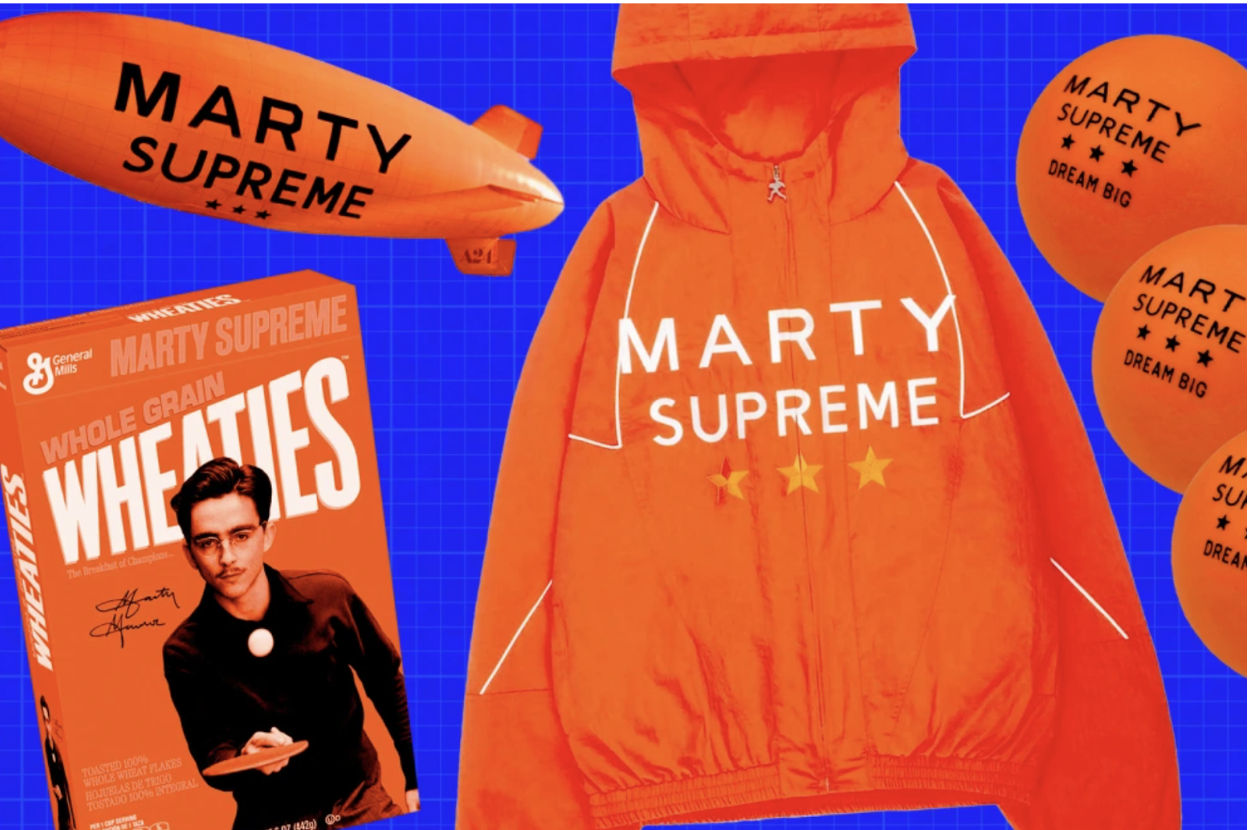
Limited-edition windbreakers, hoodies, and tees — items that feel like artifacts, not throwaway promo swag. Crowds lined up for pop-ups; resellers are already pricing them sky-high.
Celebrity sightings wearing the merch, from sports stars to cultural icons — a tactic lifted straight out of streetwear and fashion drop culture.
A campaign color — Marty Supreme Orange — that has become shorthand for the film itself, echoing how Barbie turned pink into cultural electricity.
And merchandising that isn’t ancillary, but central to the narrative — jackets and merch that fans treat as tokens of belonging.
This isn’t product placement, and it isn’t branded merch as afterthought — it’s strategic cultural object creation.
The Merch Buzz = Audience Engagement
What Famous Campaigns makes clear is that audiences today don’t want more ads; they want moments that feel real and worth sharing.
Traditional movie marketing is still there: press tours, premieres, interviews. But on its own, that old playbook feels antiseptic to TikTok natives and Gen Z. They don’t fall in love with uniform messaging — they fall in love with stories they can inhabit, objects they can own, and moments to meme. The rise of Marty Supreme merch — coveted, scarce, and legitimized by culture makers — highlights how merchandising has become a primary vehicle for storytelling and hype, not an afterthought.
Merch Beyond Merchandise
What this campaign shows — and what other industries should take note of — is that:
Merch is a storytelling tool. It isn’t “sell more stuff”; it’s “extend the narrative.”
Objects build culture. Fans seize on tangible items as a way to signal identity and affiliation.
Hype can come from play, not sales pitches. The more an audience feels invited into something unpredictable, the more they share it.
This approach isn’t unique to film anymore — we see it in streetwear, sneakers, music drops, and even tech culture. But Marty Supreme shows that when merchandising and creative promotion converge at scale, you get something that feels alive — something that doesn’t just announce a product, but creates a moment worth talking about.
In Short: Merch Is Back — and It’s Social Currency
Whether Marty Supreme ends up a box office juggernaut or not, one thing is clear: the buzz wasn’t built on posters and trailers alone. It was built on objects of desire, culture hacks, and moments seeded for virality. That’s exactly why merchandising isn’t fading — it’s becoming central again to how stories are told, communities are formed, and media events are born.
If traditional movie marketing was once a march… Marty Supreme’s campaign is a performance — and somehow, the merch became the headline act.